JST CREST — 2026–2032

Twin
Agriculture

Multiscale Spatiotemporal Virtualization
of Cultivation Environments for Twin Agriculture

PI Fumio Okura (SANKEN, The University of Osaka)
JST CREST · Digital Spatio-Temporal Expansion
Period Oct 2026 – Mar 2032

01VISION

From experience
to optimization.

Agriculture, redesigned in virtual space

Cultivation is an interaction between plants and people. We virtualize the entire cultivation environment to build the foundations of Twin Agriculture — growing crops in real and virtual space at once.

203X — THE FUTURE

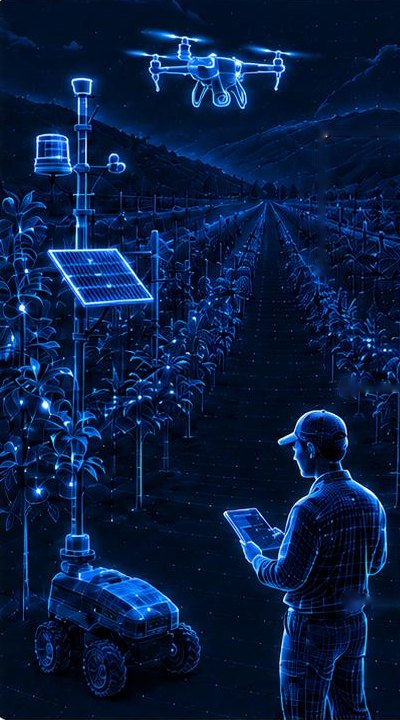
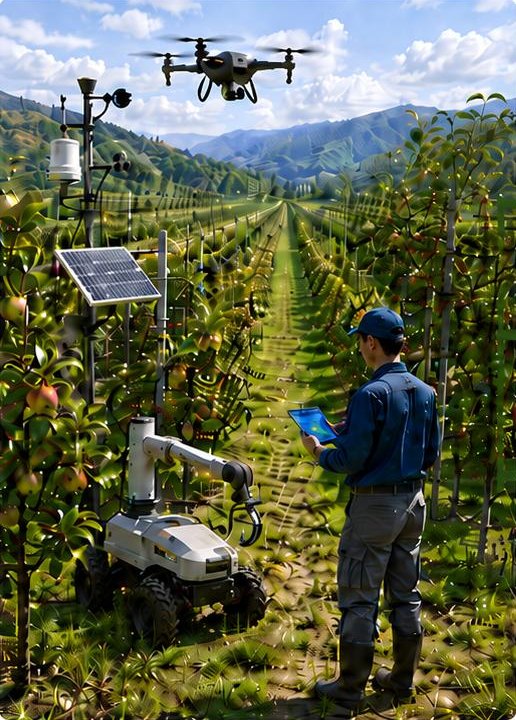
Every task carried out in the field is continuously recorded by drones, robots and farmers' own viewpoints, and mirrored in real time onto a virtual farm — the Twin Agriculture Platform. There, detailed plant structure and growth forecasts, the state of the whole field, and the know-how of farmers are fused, and the next optimal action is fed back to people and robots.

TODAY — THE GAP

"Smart agriculture" has so far delivered harvesting, spraying, and relatively simple disease detection. Supporting the skilled, everyday work of farming — pruning, training, growth forecasting and yield maximization — requires virtualizing every leaf and branch, and even the intent of experienced farmers. This project takes on that bottleneck directly.

Real space
  • Drones
  • Weather & environmental sensors
  • Agricultural robots
  • Farmers
VirtualizationBuilding, analyzing & predicting the digital twin
LLM / LVLMAgentsWorld modelsSimulationOptimization
Twin Agriculture
Platform
New discoveries
Feedback to the fieldOptimal-task suggestions, robots, decision support
Virtual space
  • 01Plant-levelBranch- & leaf-level 3D structure · Temporal growth modeling · Growth prediction
  • 02Field-level4D field modeling · Spatial growth data · Growth, yield & disease maps
  • 03Farmer-levelAction understanding from egocentric video · Motion & work trajectories · Tacit knowledge & decisions
Cultivating in both real and virtual space, and feeding optimal actions back to the field.
02CHALLENGE

Three scales,
one cultivation.

Why virtualizing cultivation is hard
Leaves and branches of a plant
Similar appearanceThin leavesOccluded branches
SCALE 01 — PLANT

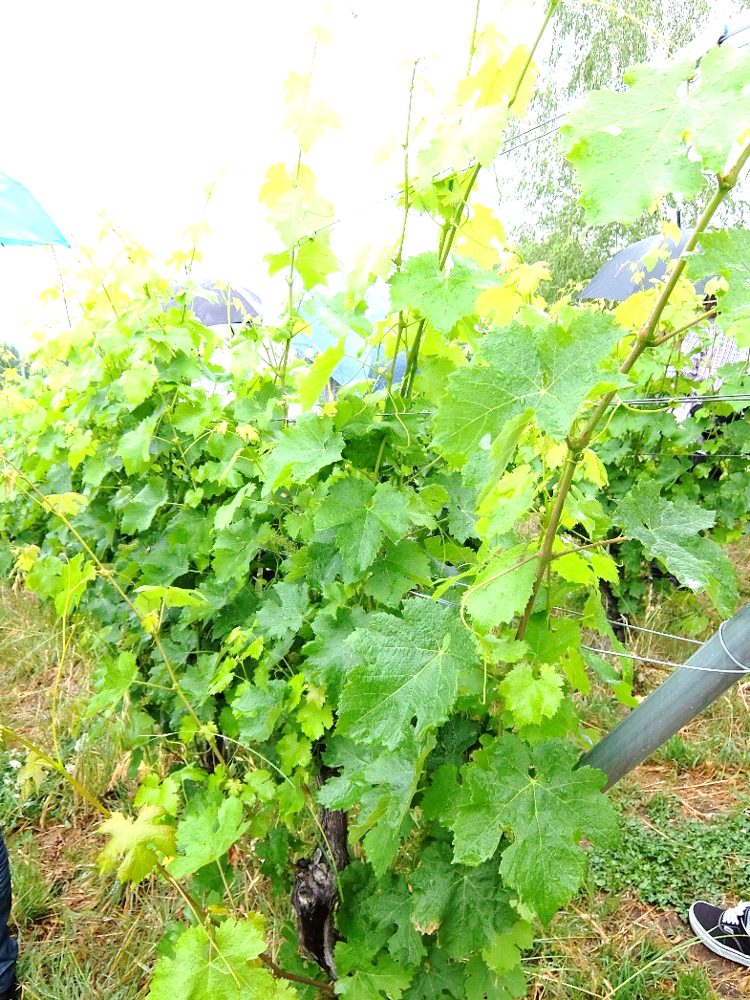
Thin branches, thin leaves, heavy occlusion, constant growth

Plants are among the most challenging subjects for computer vision. Finding fruit is not enough to support skilled tasks such as pruning and training.

How many leaves, what shape?What is the branch structure?
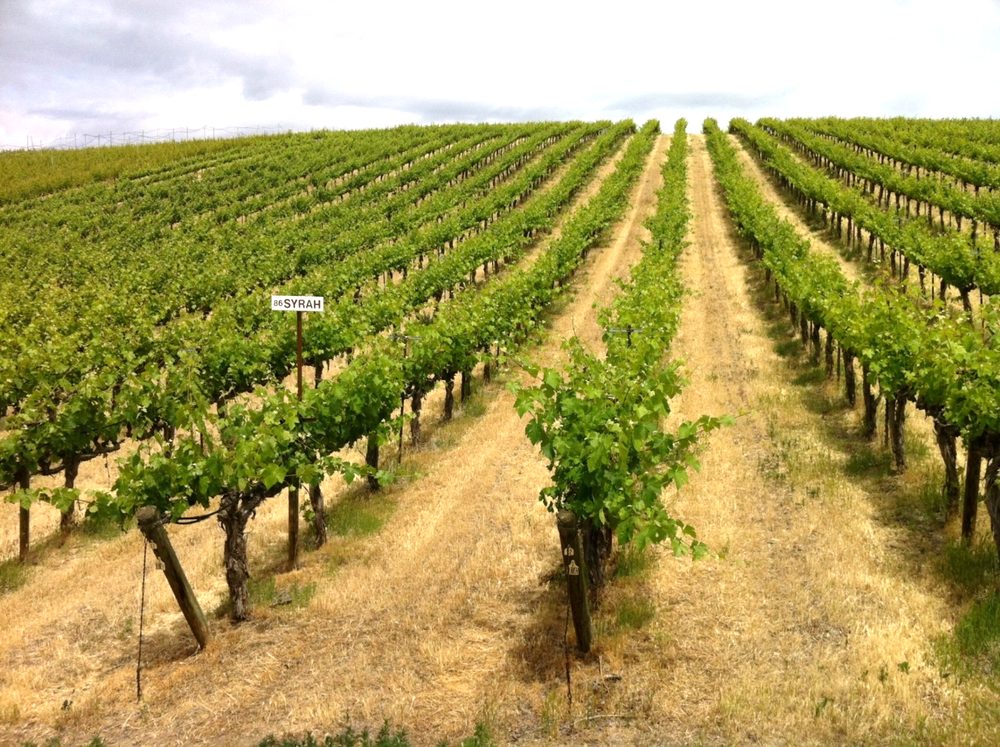
A vineyardPhoto: Agne27 / CC BY-SA 3.0
Tangled branchesComplex shapes
SCALE 02 — FIELD

Vast, dense fields that never stop changing

Large, densely planted fields require separating individual plants and continuously updating crop and environmental information.

Can each plant be segmented?
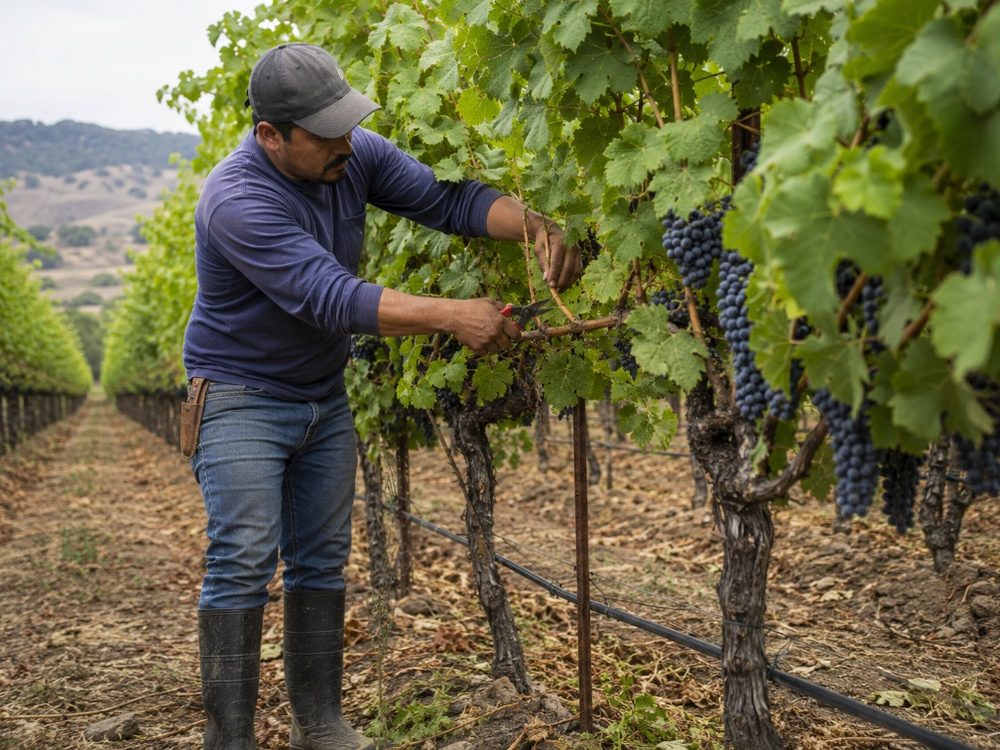
A farmer pruning a vine
Tacit expertiseComplex targets
SCALE 03 — FARMER

Tacit knowledge behind expert decisions

Farm work is not just physical motion; it is an intellectual act grounded in understanding the plant and years of experience.

Which branch is being pruned?Why that branch?

For example, "which plant in the field, which branch, and with what intention is this person pruning?" — answering this requires virtualizing all three scales and linking them together.

03RESEARCH

Research themes

Four interlinked projects
THEME 01 — PLANT-LEVEL

Plant-level Virtualization

Digital plants, branch by branch

Reconstructing the 3D structure of individual plants down to each branch, leaf and fruit, and extending it to temporal correspondence and growth prediction. Combining procedural modeling, large language models and physics simulation, we turn reconstructions into "virtual plants" that predict growth, mechanics and the outcome of farm work.

3D reconstructionOcclusionGrowth modelingProcedural model

Led by Okura group (The University of Osaka)

THEME 02 — FIELD-LEVEL

Field-level Virtualization

4D digital twins of entire fields

Integrating RGB, multispectral and LiDAR data from drones, ground robots and environmental sensors to map crop distribution, growth status, environment and their changes into a 4D virtual space — a field-scale digital twin that is updated continuously and responsively.

UAV4D mappingPhenomicsMultispectral / LiDAR

Led by Guo group (The University of Tokyo)

THEME 03 — FARMER-LEVEL

Understanding Skilled Farm Work

How farmers perceive, decide and act

We study how farmers perceive their surroundings and act on them, drawing on video and a wide range of other information. By capturing the relationship between the experience and knowledge of skilled farmers and the state of plants and fields, we aim to develop AI technologies that support the next generation of agriculture.

Agricultural AIHuman-centered visionSkill understanding

Led by Sato & Shinoda group (The University of Tokyo)
THEME 04 — INTEGRATION

Twin Agriculture
Platform

Connecting the three scales

An integrated platform that stores and visualizes data from all three scales, aligned by shared spatio-temporal coordinates and plant IDs. It describes "which farmer did what, to which plant, in which field" in a unified way — the foundation for feeding insight back into the real world.

  • TESTBEDTwin Agriculture testbeds on research and commercial farms
  • DISCOVERYNew agronomic and botanical insight via LVLMs
  • WORLD MODELWorld models and agents learned from field data
  • FEEDBACKTask suggestions, training, robot simulation
04ROADMAP

Roadmap

Plan and milestones
PHASE 1 — FOUNDATION

Establishing three-scale virtualization on a research farm

Using the University of Tokyo's research orchard as a Twin Agriculture testbed, we accumulate plant, field and farmer data over time — virtualizing the entire orchard down to individual branches — and realize the platform's first proof of concept.
PHASE 2 — DEPLOYMENT

Scaling to commercial farms and closing the loop

Integrating growth prediction, intent estimation, task suggestion and physical / procedural simulation, we extend to multiple fields and crops, and demonstrate feedback of optimal tasks to farmers and robots.
MIDTERM — FY2028

Twin Agriculture PoC on a research farm

3D and temporal reconstruction of field-grown plants, 4D mapping of the research farm, and an egocentric dataset of key farm tasks — presented together as a cross-scale virtualization prototype.

FINAL — FY2031

Demonstration on commercial farms

Advanced virtualization robust to diverse farms, testbeds extended to commercial farms, and demonstrated effectiveness in real agricultural work.

05MEMBERS

Team

Research organization
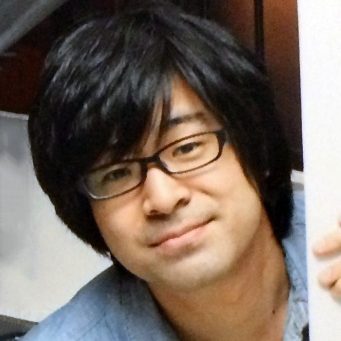
Fumio Okura↗ PRINCIPAL INVESTIGATOR

Fumio Okura

大倉 史生

Associate Professor, SANKEN (Institute of Scientific and Industrial Research), The University of Osaka

Project lead / Plant-level / Platform Website ↗
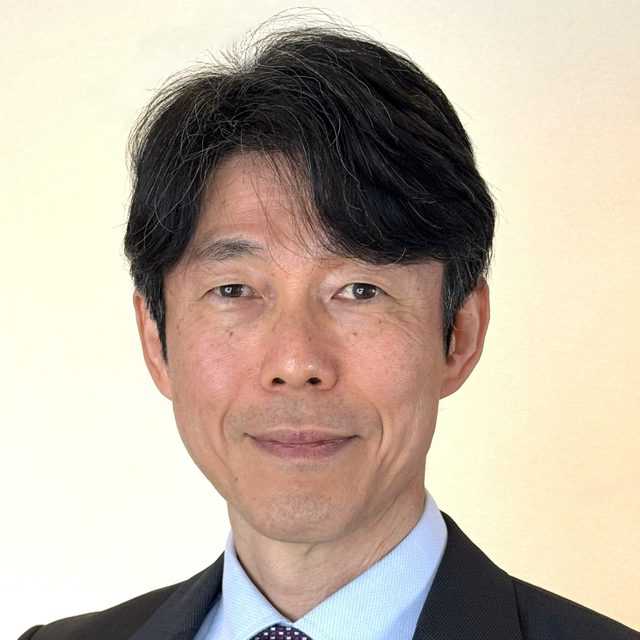
Wei Guo↗ CO-PRINCIPAL INVESTIGATOR

Wei Guo

郭 威

Associate Professor, Graduate School of Agricultural and Life Sciences, The University of Tokyo

Field-level Website ↗
Yoichi Sato↗ CO-PRINCIPAL INVESTIGATOR

Yoichi Sato

佐藤 洋一

Professor, Institute of Industrial Science, The University of Tokyo

Farmer-level Website ↗

COLLABORATORS

PLANT-LEVEL · PLATFORMOkura GroupThe University of Osaka
Yuta NakashimaProfessor, SANKEN, The University of Osaka
Weng Ian ChanSpecially Appointed Researcher, SANKEN, The University of Osaka
Yosuke TodaCEO, Phytometrics Inc.
FIELD-LEVELGuo GroupThe University of Tokyo
Siyao ChenAssistant Professor, Graduate School of Agricultural and Life Sciences, The University of Tokyo
Mashiro OkadaProject Researcher, Graduate School of Agricultural and Life Sciences, The University of Tokyo
FARMER-LEVELSato & Shinoda GroupThe University of Tokyo
Risa ShinodaAssistant Professor, Institute of Industrial Science, The University of Tokyo
Masashi HatanoProject Researcher, Institute of Industrial Science, The University of Tokyo
06NEWS

News

  • PROJECTThe JST CREST project "Multiscale Spatiotemporal Virtualization of Cultivation Environments for Twin Agriculture" has started.
  • WEBProject website launched.
07PUBLICATIONS

Publications

Publications will be listed here as they appear.
08CONTACT
Get in touch →
Principal InvestigatorFumio Okura
SANKEN, The University of Osaka
8-1 Mihogaoka, Ibaraki, Osaka 567-0047, Japan
FundingThis project is supported by JST CREST, under the research area "Technological Innovation and Sustainable Value Co-creation for Digital Spatio-Temporal Expansion" (Research Supervisor: Yoichi Motomura).